

Liven Up Reading Discussion
Do you struggle to get students truly engaged in their reading discussions?
Back when I was in school, class discussion usually meant sitting silently, reading at home, and filling out comprehension worksheets—followed by a teacher-led whole-class Q&A where only two or three students spoke. We rarely left our seats, collaborated with peers, or dug deeply into a text together.
I knew I wanted something different for my own middle and high school students. Depending on my class dynamics, learning objectives, and the text itself, I’ve built a go-to toolkit of interactive discussion strategies that turn passive readers into active, enthusiastic participants.
(Plus, fostering a vibrant reading community means prioritizing time to actually read! My students participate in Silent Sustained Reading (SSR) at least twice a week. Grounding my practice in the work of experts like Donalyn Miller and Kelly Gallagher, as well as collaborating with incredible ELA teachers across professional learning networks, has reinforced just how vital authentic reading and discussion truly are.)
If you’re looking to break out of the “boring discussion” trap, here are seven of my favorite ELA reading discussion activities to try in your classroom: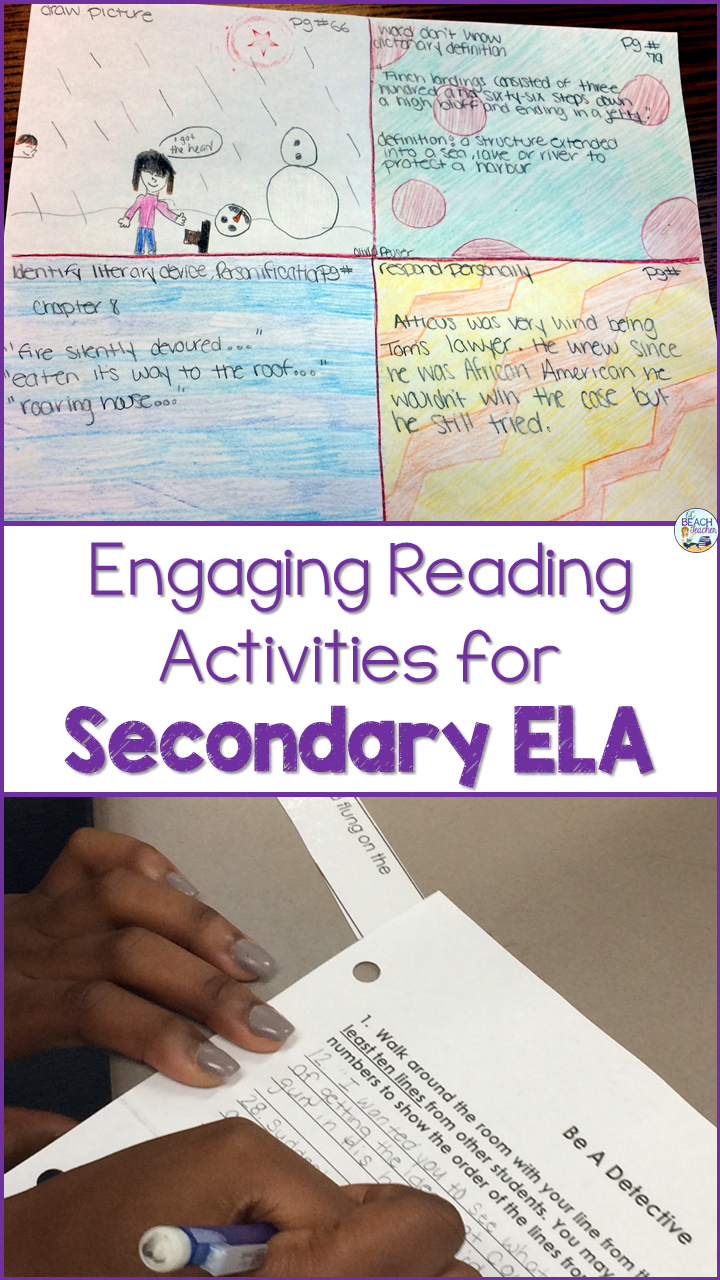
1. Anticipation Activities (Hook Them Early)
Hooking students before they even open the book sets the stage for richer discussion later. Two of my favorite pre-reading strategies include:
- Traditional Anticipation Guides: Present students with provocative, opinion-based statements related to the text’s core themes. For example, before reading Mark Twain’s “The War Prayer,” I ask students to rate their agreement with statements like:
- A. It’s unpatriotic if you do not support your country’s war efforts.
- B. Humor can be used to hurt others.
Students must justify their reasoning, leading to fiery debate and deep thematic background before reading page one.
- Text Evidence Inquiry (Detective Work): Print and laminate sentence strips from upcoming chapters. Give each student a line of text, and then get them out of their seats to hunt down clues! Students move around the room like real detectives, “collecting evidence” from classmates to piece together the bigger picture. After recording multiple lines of text on their handouts, they analyze their gathered evidence, draw conclusions, and make predictions about the upcoming plot and themes.
Want to see this in action? Check out my Frankenstein Text Evidence Pre-Reading Inquiry Activity to get your students up, moving, and gathering evidence right from day one!
2. Numbered Heads Together
This cooperative learning strategy holds every single student accountable while keeping the atmosphere lively and unpredictable. Best of all, working through the questions as a team first gives shy or struggling students a low-stakes chance to rehearse their thoughts and have a prepared answer ready before anyone is called on.
- Arrange students into heterogeneous groups of 3 to 5 to answer a set of scaffolded text questions together.
- Randomly assign each student in a group a number (e.g., 1 through 5).
- When it’s time to share out, call a number and a question—for instance, “All Number 3s, please stand up to answer Question 4.”
- Every standing student shares a piece of the answer so that everyone gets to contribute. Because students never know which number will be paired with which question, the whole group stays engaged during collaboration!
3. Close Reading Scenarios & Investigations
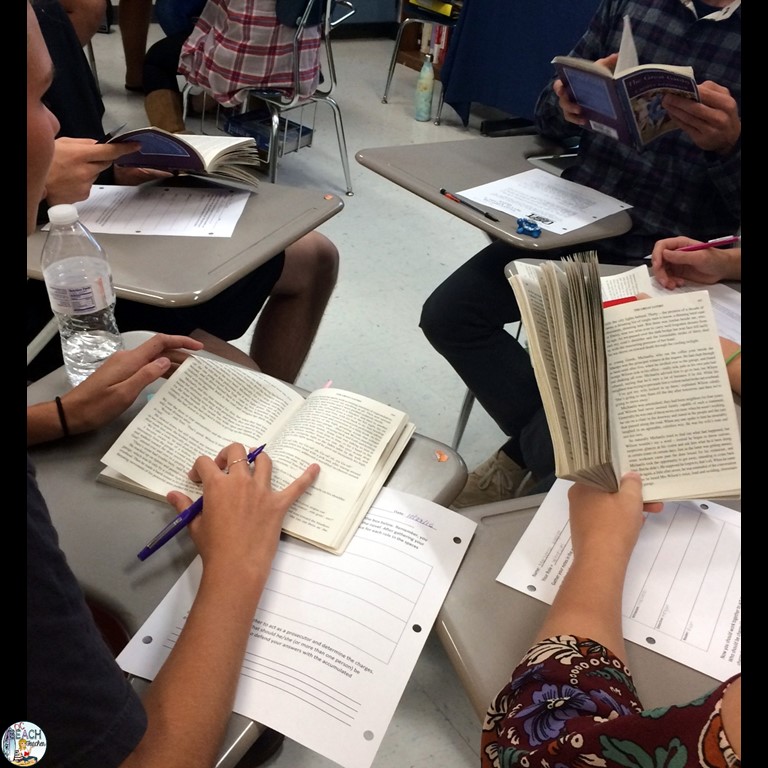
Transform text analysis into an immersive investigation by framing a key scene as a real-world case. Because students take on the personas of different jobs or characters, it acts almost like a role-play activity that makes the reading truly come alive!
The Great Gatsby Investigation: After reading Chapter 7 (Myrtle’s death), students work in groups, stepping into roles like medical examiner, police investigator, and eyewitness to piece together what actually happened. Afterward, they read real-world legal texts regarding state driving laws, review their evidence, and formally determine which characters should face criminal charges.
To Kill a Mockingbird Trial Review: Students gather testimony and physical evidence from Tom Robinson’s trial, take on the persona of jury members, and deliberate a verdict based strictly on text evidence.
4. The Alphabet Review
Short on planning time? This simple, low-prep strategy works brilliantly as a quick synthesis or review activity after a chunk of reading.
How it Works: Provide students with a grid where each box features 1–2 letters of the alphabet (combining trickier letters like X, Y, and Z into one box). Inside each box, students write a word connected to the reading, along with 1–2 sentences explaining the connection.
Flexible Thinking: The words don’t have to appear explicitly in the text—they can be thematic or conceptual. For example, reading Lord of the Flies, a student might choose “C” for Conch, explaining both its literal role in calling meetings and its symbolic representation of democratic order.
Zero-Prep Hack: If you don’t have time to print a chart, simply have students write the alphabet vertically down a sheet of notebook paper and go from there!
5. The “Boxing” Strategy
I always tease my students by telling them we’re going to be “boxing” in class—it’s corny, but it gets a laugh!
- The Setup: Hand out blank printer paper and have students fold it into four quadrants (boxes).
- The Tasks: Assign a specific reading task to each box for the assigned pages. Tasks might include sketching a key scene, defining vocabulary in context, identifying literary devices, or writing a personal response.
- The Discussion: Once individual boxes are complete, students use their papers as talking points for partner, small-group, or whole-class discussions. It requires minimal prep, gives tactile learners a boost, and can be reused with any text!
6. Roundtable Reading Discussion
If you love the depth of a Socratic Seminar but want a scaffolded approach that ensures every student participates, this structured discussion format is a game-changer. It helps students gradually take true ownership of their conversation through a step-by-step process:
- Preparation & Initial Writing: Students prepare beforehand by analyzing the text and responding to opening prompts in writing.
- Rehearsal: Before speaking to the whole group, students share their thoughts with a partner. This low-stakes step builds confidence, especially for quieter students.
- Discussion & Active Observation: As the discussion unfolds, students practice active listening, taking notes, and tracking peer contributions.
- Reflection: Students wrap up by evaluating the discussion and their own participation.
Want to try this in your room? Check out my detailed blog post walking through the step-by-step Roundtable process! You can also grab my Roundtable Reading Discussion TpT Resource, which includes 33 ready-to-print handouts to guide you and your students every step of the way.
7. Written C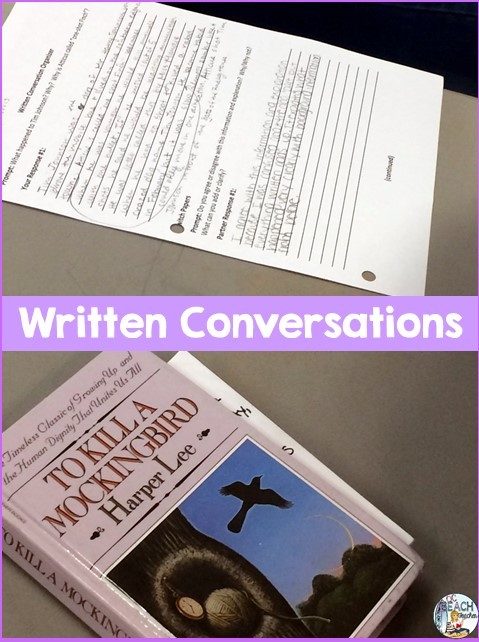 onversations (Silent Discussions)
If you have a quiet class—or a class that struggles with interrupting—a written conversation gives every voice a chance to be heard.
- Desk-to-Desk Method: Give students a thought-provoking prompt about the reading. After writing their initial response, they pass their paper to a partner who evaluates, elaborates, or challenges the original writer’s ideas. Pass the papers back and forth for a few rounds of silent conversation before opening up the floor for a whole-class debrief.
- The Carousel Variation (Get Them Moving!): Want to add some physical movement? Turn this into a carousel activity by hanging sheets of chart paper or poster board around the room, each featuring a different question or prompt. Students walk around the room with markers, reading their classmates’ notes on each poster, adding their own responses, and building a multi-layered written dialogue on the walls.
Final Thoughts
Dynamic reading discussions don’t happen by accident—they happen when we give students structured, collaborative ways to process what they read. Whether you have 30 seconds to write the alphabet on the board or want to run a fully scaffolded Roundtable Discussion, changing up your approach keeps reading fresh and meaningful.
What are your favorite go-to discussion strategies in secondary ELA? Drop your ideas in the comments below!


5 Comments
Good for you for persevering with SSR in light of the challenges you face from administrators! I love your idea for the anticipation activity, and the "boxing" is so cute. These are wonderful strategies, and I had not heard of all of them. Thanks for sharing!
You crack me up – medieval times. The numbered heads idea is fabulous. I think I could use that numerous ways.
I taught at a school that had SSR at the start of every class. That was my first experience, and I saw huge benefits. I modeled reading for the students, and they were always interested in what I was reading.
Thanks for the ideas. 🙂
I love your Gatsby idea! I definitely want to use it! Great ideas. Thank you!
Love the boxing idea! I'm also a big fan of the written conversations–they get everyone involved and thinking. Thanks for sharing!!
Impressive idea this is the best way to engage students with studies activity UK Assignments Help Writing Service